PMB 200/300 Overview
As a PMB 200/300 supplier, we complete our approved PMB line with its highest nominal penetration range. This range covers binders with penetration values from 200 to 300 in tenths of a millimetre at 25 °C. The remaining properties depend on the applicable standard and the project’s requirements.
We supply and export PMB 200/300 for importers, distributors, contractors and procurement teams in Dubai, across the UAE and in international markets. Each enquiry is quoted against the buyer’s specification, with actual availability confirmed at quotation stage. For the complete approved range and general PMB background, visit our Polymer Modified Bitumen category page.
What PMB 200/300 Means
What the name confirms. PMB identifies the product as Polymer Modified Bitumen. The numbers 200/300 represent its nominal penetration range, with a lower limit of 200 and an upper limit of 300, expressed in tenths of a millimetre of needle penetration at 25 °C.
What it leaves to the specification. The range does not define the softening-point class, elastic recovery, cohesion, behaviour at service temperatures or polymer system. Instead, the governing specification determines these requirements, along with the applicable penetration test method. The offered product’s Technical Data Sheet (TDS) confirms its declared properties.
Characteristics and Positioning of PMB 200/300
Position in the line. PMB 200/300 is the highest nominal penetration range among our nine approved PMB ranges. Its 100-unit band is also the widest in the line. A higher penetration value indicates a softer consistency in the test; however, it does not establish how the binder will perform in a pavement.
A range with one neighbour. PMB 200/300 meets PMB 120/200 at the value 200 and does not overlap any other approved range. By contrast, ranges above 300, such as 330/430, are unmodified penetration-bitumen ranges and do not belong to the PMB line.
The role of the polymer. Depending on the formulation, polymer modification can increase cohesion and elastic recovery while reducing temperature susceptibility compared with an unmodified binder of similar penetration. For PMB 200/300, as with any PMB, the required tests must demonstrate whether the product meets the project’s performance requirements.
Typical Applications of PMB 200/300
PMB 200/300 is a specialist range whose applications depend on individual project specifications rather than general practice. Where a specification names this range, engineers may consider it for hot-applied surface treatments and other specialist paving work that requires a modified binder with high penetration. A pavement designer may also consider it for cold-climate projects when the required binder properties support that choice.
These are possible applications, not general recommendations. Suitability depends on the specification, climate, service conditions, traffic, pavement design, and required binder properties. In high-temperature regions such as the UAE, engineers should assess this high-penetration range carefully rather than treat it as a default choice.
PMB 200/300 and EN 14023
EN 14023 provides the European specification framework for Polymer Modified Bitumens. Under this framework, a PMB designation combines the nominal penetration range with a minimum softening-point class. Depending on the project, the specification may also require classes for additional properties.
For PMB 200/300, the penetration range forms one part of the designation. The applicable softening-point class depends on the specified product requirements. Therefore, our quotation and the offered TDS must confirm the complete designation and applicable requirements. A reference to EN 14023 alone does not establish conformity. If a project cites a national or authority standard, that governing standard takes precedence.
PG Grades Are a Different System
Performance Grade (PG) specifications classify binders by design pavement temperatures. No PG grade corresponds automatically to PMB 200/300, and a PG binder does not necessarily contain a polymer modifier. For PG-based tenders, see our Performance Grade (PG) bitumen range.
PMB 200/300 vs Conventional Penetration Bitumen
Conventional penetration bitumen is an unmodified binder graded mainly by penetration. You can find our conventional grades on the Penetration Bitumen page. PMB 200/300 differs in composition and classification: it contains a polymer modifier, and its designation combines the penetration range with a softening-point class and any additional properties required by the specification.
Similar penetration figures do not make conventional bitumen and PMB 200/300 equivalent. Therefore, do not substitute one for the other without the specifier’s approval. Likewise, PMB is not automatically the right choice when the pavement design specifies an unmodified binder.
PMB 200/300 vs PMB 120/200
These are the two highest penetration ranges in our PMB line and the only neighbouring ranges at this end of the scale. At the nominal-range level, they compare as follows:
| PMB 120/200 | PMB 200/300 | |
| Nominal penetration range | 120-200 | 200-300 |
| Band width | 80 units | 100 units |
| Values shared with the other range | 200 only | 200 only |
| Overlaps with other approved PMB ranges | 75/130 and 90/150 | None |
PMB 200/300 has the higher nominal penetration range. However, this describes the penetration band only; it does not show which product performs better. Neither range is universally better than the other.
Because the ranges meet at a single boundary value, a binder measuring close to 200 may appear to fit either range. Nevertheless, each product must meet its own complete designation, including the applicable softening-point class. The two ranges are not interchangeable, and the project specification determines the appropriate choice. You can view all approved ranges on our PMB category page.
How to Select the Appropriate PMB Range
Follow this sequence when selecting PMB 200/300:
Specification → standard → required classification → site conditions → offered TDS → approval
- Specification: Confirm that the project names or permits PMB 200/300.
- Standard: Identify whether EN 14023, PG, or a national or authority standard applies.
- Required classification: Record the penetration range, softening-point class, and any additional required properties.
- Site conditions: Ask the pavement designer to confirm that the climate, service conditions, traffic, and pavement design suit this range.
- Offered TDS: Compare the product’s TDS and test results with every applicable requirement.
- Approval: Obtain any required consultant, authority, or buyer approval.
As your PMB 200/300 supplier, we confirm the applicable product specification with you at the quotation stage.
Supplying PMB 200/300 from Dubai for UAE and Export Projects
As a PMB 200/300 supplier and exporter serving the Dubai market, we handle enquiries from UAE project teams and from importers and distributors sourcing for international destinations. Because this is a specialist range, we use the buyer’s specification as the starting point for every offer. We also consider the required quantity and destination.
For UAE projects, we align the offer with the binder clause in the contract documents. For export orders, we also confirm delivery terms, routing, and destination documentation. Availability, origin, and loading port are confirmed in writing for each order at the quotation stage rather than assumed in advance.
PMB 200/300 TDS, COA and Inspection Documents
We confirm the available documentation according to the product and order requirements. Three document groups matter most when sourcing PMB 200/300:
- Before ordering: The Technical Data Sheet (TDS), which states the offered product’s complete designation and specification basis.
- With each batch: The Certificate of Analysis (COA), which reports tested values against the agreed specification and shows where the supplied batch sits within the penetration range.
- Where required: Additional test documents, third-party inspection records and a Safety Data Sheet, agreed at quotation stage.
List your required documents in the enquiry so we can confirm them in the offer.
Frequently Asked Questions
What is PMB 200/300?
A polymer modified bitumen with the highest nominal penetration range in our PMB line, 200 to 300 (0.1 mm at 25 °C). Its complete specification is set by the project.
Is 200/300 a complete EN 14023 designation?
No. It is the penetration element. The applicable minimum softening-point class and any further required properties complete the designation and are confirmed per order.
What is the difference between PMB 120/200 and PMB 200/300?
At nominal-range level, 120/200 covers 120–200 and 200/300 covers 200–300, meeting at 200. Neither is better in general; the specification decides which is required.
Can PMB 120/200 be supplied where 200/300 is specified?
Not without the specifier’s approval. Each product is supplied against its own complete designation.
Where is PMB 200/300 used?
As a specialist range, where a specification names it, for example in some hot-applied surface treatments and cold-climate projects.
Are higher ranges such as 330/430 also PMB?
No. Ranges above 300, such as 330/430, are unmodified penetration-bitumen ranges and are not part of our PMB line.
Does PMB 200/300 have a PG equivalent?
No. PMB and PG are separate classification systems with no automatic equivalence.
Can I source PMB 200/300 through Dubai?
Yes. As a PMB 200/300 supplier and exporter, we quote for UAE and international destinations, confirming availability, origin and loading port for each order.
Confirm the Specification and Request a PMB 200/300 Quote
Specification, documentation and pricing for PMB 200/300 are confirmed against your project requirements. To receive an offer for Dubai, elsewhere in the UAE or your export destination, tell us:
- the binder clause or complete designation, including the softening-point class
- destination country and port
- quantity
- packaging requirement
- documentation and inspection requirements
Request a PMB 200/300 Quotation
Our Dubai Bitumen Prices page shows conventional-grade prices only; PMB 200/300 is priced by quotation.


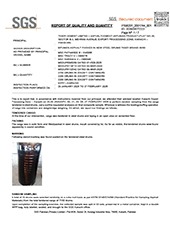
SGS Inspection Report Grade 35/50 Loading the Month of Jan-Feb 2026
Tiger Bitumen Price List
English Version
French Version